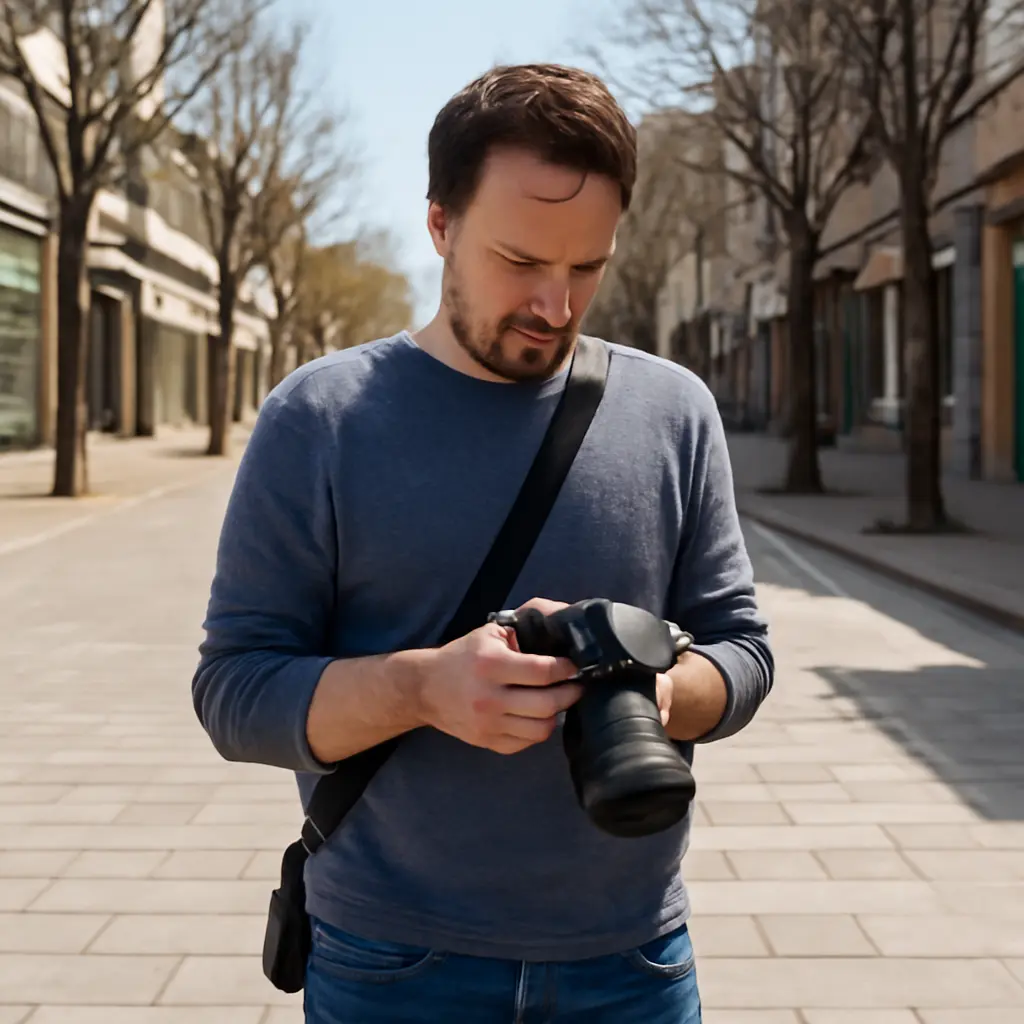
A camera flash can turn an ordinary photograph into an intrusion when it is used to intimidate, expose, or persistently target someone who has not agreed to be photographed. Filming strangers is generally not automatically unlawful in public, but the rules change with location, privacy expectations, audio recording, harassment, and how footage is shared. A useful way to judge the line is to consider consent, setting, conduct, and consequences: photography in an open street is different from recording inside a home, repeatedly following someone, or publishing intimate images. These distinctions matter as cameras become more common: Pew Research Center reported in 2021 that 85% of U.S. adults said they owned a smartphone, devices that routinely include cameras. This guide explains public photography, privacy limits, flash use, harassment, and responsible publishing, while noting that laws differ by jurisdiction.
Public photography and the right to film strangers
Public photography is the making of images in places where people generally have no reasonable expectation of privacy. The Reporters Committee for Freedom of the Press explains that, in the United States, people ordinarily may photograph what is plainly visible from a public place, subject to restrictions on conduct, sensitive sites, and other laws. This is a general principle, not a universal permission: rules vary by country, state, venue, and circumstances.
Being visible in public does not mean a person has agreed to every use of their image. Taking a picture, recording sound, using footage commercially, and posting identifying or humiliating material raise different legal and ethical questions. A photographer may be allowed to record a scene yet still cross a line by obstructing someone, persistently pursuing them, or using the image to threaten or harass them.
Street photography and incidental capture
Street photography documents people and everyday life in public settings. Incidental capture—where a passerby appears as part of a wider scene—is generally less intrusive than a close, prolonged focus on one person. Context matters: a crowd shot at a public festival is not the same as singling out a distressed person, a child, or someone experiencing a medical emergency.
Private places and reasonable expectations
Privacy protections become stronger in places such as homes, changing rooms, bathrooms, and medical settings. The U.S. Department of Justice describes “video voyeurism” as a federal crime in specified circumstances involving capturing a person’s private area without consent where that person has a reasonable expectation of privacy. State and local laws may add broader protections. A venue open to the public, such as a shop or concert hall, may also set its own photography rules even when general public-space recording principles would otherwise apply.
Flash photography and intrusive conduct
Flash photography uses a brief burst of light to illuminate a scene. A flash is not inherently unlawful or abusive, but its effect and purpose matter. Repeatedly firing a flash at someone to provoke, disorient, embarrass, or force a reaction can become part of intimidating or harassing conduct, particularly when combined with following, blocking, or unwanted close-up filming.
When a flash becomes a safety concern
A bright burst can startle people, disrupt an event, or create hazards in settings where sudden light is dangerous. It may be especially concerning near roads, around people operating machinery, or for individuals with photosensitivity. The Epilepsy Foundation notes that flashing lights can trigger seizures in a small proportion of people with epilepsy; it estimates that about 3% of people with epilepsy have photosensitive seizures. That figure does not mean ordinary camera flashes commonly cause seizures, but it supports avoiding repeated or deliberate flashing at someone.
Harassment, stalking, and intimidation
Harassment and stalking are patterns of conduct, not merely the act of taking a photograph. The U.S. Department of Justice’s Office on Violence Against Women describes stalking as a course of conduct directed at a specific person that would cause a reasonable person to fear for their safety or suffer substantial emotional distress. Repeatedly appearing where someone goes, filming them despite clear objections, threatening to publish images, or coordinating others to target them may be relevant to assessing a pattern. Legal definitions and thresholds differ, so anyone facing a real threat should preserve evidence and seek local legal or safety advice.
Consent, audio recording, and publishing
Consent is permission for a particular act or use, and it can be limited or withdrawn. In public, consent may not be legally required for every photograph, but asking is a strong ethical practice for close portraits, interviews, sensitive situations, and images intended for advertising. A person’s refusal should be respected even where the photographer believes the law permits the shot.
Audio recording has separate rules
Video may capture conversations as well as images, and audio-consent rules can be stricter than rules for silent photography. In the United States, federal law generally permits recording a conversation when the recorder is a party to it or one party consents, subject to exceptions; many states impose additional requirements, and some require consent from all parties in particular circumstances. The Reporters Committee for Freedom of the Press advises checking the law that applies to the location and situation rather than assuming that permission to film also permits recording sound.
Posting images and harmful disclosure
Publishing an image can magnify its impact by making it searchable, shareable, and difficult to remove. Before posting, consider whether the image identifies a vulnerable person, reveals a home or routine, humiliates someone, or invites unwanted attention. Nonconsensual intimate imagery is subject to criminal and civil remedies in many jurisdictions, and some laws also address manipulated sexual images. The National Center for Missing & Exploited Children warns that sharing identifiable images of children can create lasting privacy and safety risks; avoid posting children’s images without appropriate permission, especially when location details are visible.
Practical boundaries for photographers and bystanders
A responsible photographer can reduce harm without abandoning legitimate documentation. The following practices help distinguish ordinary observation from intrusive targeting:
- Check posted rules and local law, especially in private venues, transit systems, schools, courts, and government facilities.
- Ask permission before making a close portrait or recording an interview, and stop if the person objects or appears distressed.
- Do not use repeated flashes to provoke or pressure someone; avoid flash where it could create a safety risk.
- Keep a respectful distance and do not block, follow, threaten, or repeatedly confront a subject.
- Be cautious with children, patients, people in crisis, and anyone in a vulnerable situation.
- Review images before sharing; remove identifying details when they are unnecessary, and do not publish intimate or humiliating material without consent.
For someone being filmed, a calm request to stop may help, but personal safety comes first. Move to a safer public place, contact venue staff or authorities when appropriate, and document repeated unwanted conduct from a safe distance. If a recording is being used to threaten or stalk, keep relevant messages and dates rather than escalating the encounter.
Conclusion: the line is set by context and conduct
Public photography is often lawful, but that does not make every use respectful or harmless. The key distinctions are whether the person is in a private setting, whether audio or intimate material is involved, whether the photographer is persistently targeting them, and whether the image is shared in a harmful way. A flash becomes more troubling when it is deliberately used to intimidate or create risk; filming becomes more troubling when it turns into following, coercion, or exposure. Learn the rules where you are, ask when a close or sensitive image is involved, and prioritize safety and dignity over getting the shot.
Sources: Pew Research Center, “Mobile Fact Sheet,” 2021, https://www.pewresearch.org/internet/fact-sheet/mobile/; Reporters Committee for Freedom of the Press, “Photographers’ Rights,” https://www.rcfp.org/photographers-rights/; U.S. Department of Justice, “Video Voyeurism Prevention Act of 2004,” https://www.justice.gov/criminal/criminal-ceos/video-voyeurism-prevention-act-2004; Epilepsy Foundation, “Photosensitivity and Seizures,” https://www.epilepsy.com/what-is-epilepsy/seizure-triggers/photosensitivity; U.S. Department of Justice, Office on Violence Against Women, “Stalking,” https://www.justice.gov/ovw/stalking; Reporters Committee for Freedom of the Press, “Recording Guide,” https://www.rcfp.org/reporters-recording-guide/; National Center for Missing & Exploited Children, “Online Enticement,” https://www.missingkids.org/theissues/onlineenticement.