
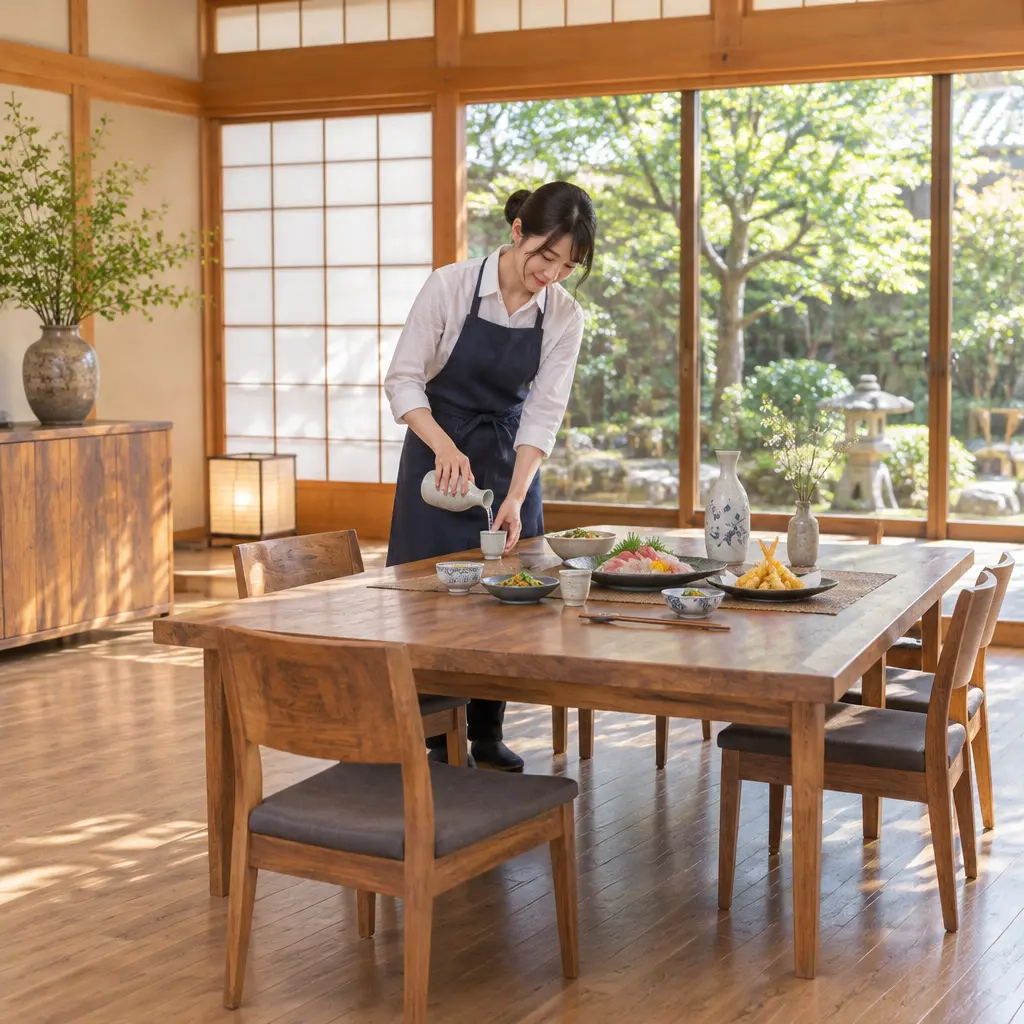
Sake temperature service is the practice of choosing how warm or cool sake should be when it is poured, and matching that serving temperature to the sake’s flavor, body, and the food on the table. A useful starting point is to serve delicate, aromatic sake chilled; fuller, savory sake cool or gently warmed; and robust, umami-rich sake warm when its structure can support heat. This is a flexible guide, not a strict rule: sake’s style, acidity, sweetness, rice-polishing level, and the dish’s intensity all matter. The Japan Sake and Shochu Makers Association (JSS) recognizes a broad range of traditional temperature names, from chilled yukibie to hot atsukan, while culinary research on sake and food pairing emphasizes balancing flavor intensity and umami rather than relying on temperature alone.
Sake temperature service matches sake structure to food intensity
Sake temperature service means selecting a serving temperature that presents a sake’s aroma, texture, and taste in a way that complements the food. The JSS describes sake as enjoyable across a wide temperature spectrum, approximately 5°C to 55°C (41°F to 131°F), with different temperatures bringing out different impressions. In practice, temperature is a service adjustment: chilling tends to emphasize freshness and crispness, while warming can make texture feel rounder and aromas more apparent. Neither effect is universal, so the best match depends on the bottle and dish.
Food intensity is the combined strength of a dish’s flavor, richness, salt, sweetness, acidity, spice, and umami. A delicate white fish preparation may be overwhelmed by an assertive, hot sake; a rich braise may make a very light, fragrant sake seem thin. Matching intensity helps keep both food and drink perceptible. The guidance below connects temperature categories with sake styles and dish types, then offers practical service steps and examples.
Temperature categories define sake service choices
The JSS’s temperature vocabulary describes traditional serving ranges, not rigid quality grades. Terms such as reishu (chilled sake), hiya (room-temperature sake in modern usage), and kan (warmed sake) help communicate service intent. Exact ranges vary among references and establishments; use a thermometer when precision matters, and treat the names as practical guides rather than universal standards.
Chilled sake: freshness for delicate and bright dishes
Chilled sake is commonly served around 5–15°C (41–59°F), spanning very cold yukibie and moderately chilled suzubie. Lower temperatures can make a sake seem brisk and restrained, which suits clean, delicate dishes such as sashimi, lightly dressed salads, and steamed shellfish. This category often works well for aromatic ginjo-style sake, whose fruit and floral notes can be appealing when cool. Avoid serving every bottle ice-cold: excessive chilling may mute aroma and make texture seem sharper or less expressive.
Room-temperature sake: balance for versatile, savory food
Room-temperature sake, commonly called hiya when served unheated, is often around 15–25°C (59–77°F), depending on the room. At this range, a sake may show more aroma and palate detail than when very cold, making it a flexible partner for grilled fish, tofu, mushrooms, and moderately seasoned dishes. The term can be confusing because historically hiya meant unheated sake, not necessarily sake at a precise room temperature; specifying an approximate temperature avoids ambiguity in service.
Warm sake: roundness for richer, umami-forward dishes
Warmed sake, or kan, ranges from gently warmed nurukan (about 40°C/104°F) to hot atsukan (about 50°C/122°F), with other traditional terms marking points between them. Gentle warmth can soften the perception of acidity and bring forward savory, grain, or rice-derived impressions in some sake. It can pair effectively with grilled meats, hot pots, miso-rich dishes, and other foods with substantial savory depth. High heat is not automatically better: it may diminish delicate aromatics or make alcohol seem more prominent, so warm gradually and taste before serving.
Sake style and food intensity guide temperature matching
Temperature categories are most useful when considered alongside sake style. The JSS explains that sake’s characteristics vary with ingredients and production, including rice polishing, fermentation, and the brewer’s choices. Those differences affect body, aroma, acidity, and umami—the same qualities that determine whether a sake can stand beside a light or forceful dish. A practical pairing starts with intensity, then adjusts temperature to preserve the sake’s strongest useful feature.
Light, aromatic sake with subtle food
Light-bodied, fragrant sake—often including ginjo and daiginjo examples—is generally suited to cool service when paired with delicate food. Their aromas can complement sashimi, lightly salted vegetables, and mild seafood without adding excessive weight. Choose a cool rather than icy temperature if the sake’s fragrance is a major part of its appeal. The pairing principle is restraint: keep seasoning, sauce, and drink intensity in proportion so one does not erase the other.
Structured, savory sake with medium-intensity food
Junmai and other fuller, more savory styles can be versatile across cool, room, and gently warmed service, depending on the bottle. Their rice-forward character and umami can connect with grilled vegetables, soy-seasoned dishes, and broths. Umami is especially relevant: the National Research Institute of Brewing identifies glutamic acid and other amino acids among compounds contributing to sake’s taste. Because foods such as mushrooms, aged cheeses, and fermented seasonings also carry umami, a structured sake can bridge them—provided the food is not so intensely seasoned that it overwhelms the drink.
Robust sake with rich or strongly seasoned food
Full-bodied, high-acidity, or pronounced umami sake can stand up to richer dishes such as grilled eel, pork, hot pot, and miso-based preparations. Gentle warming may make the sake feel more integrated with hot, savory food, while room-temperature service can preserve definition. For spicy dishes, avoid assuming that hotter sake will improve the match: heat from chili and warmth from alcohol can compound perceived intensity. A cooler, lower-alcohol option or a sake with enough sweetness and body may be more comfortable.
A practical matching method improves service consistency
A reliable match does not require a complicated chart. First assess the dish’s dominant feature—delicacy, richness, salt, spice, or umami—then choose a sake with comparable presence. Finally, adjust temperature to reveal the quality that best supports the pairing. The following examples are starting points; tasting the actual bottle with the dish remains the strongest test.
- Raw white fish or lightly dressed vegetables: a delicate aromatic sake, cool but not necessarily ice-cold.
- Grilled salmon or soy-glazed vegetables: a medium-bodied sake served cool or near room temperature.
- Mushroom broth, tofu, or miso soup: a savory sake served at room temperature or gently warmed.
- Rich grilled meat or hot pot: a fuller sake, often effective at room temperature or warm.
- Chili-heavy food: test a cooler, balanced sake and avoid increasing the dish’s heat with very hot service.
For service, warm sake gradually in a water bath rather than overheating it directly, and check the liquid temperature rather than judging only by the vessel. Chill bottles steadily and avoid leaving them in ice long enough to become excessively cold. A tasting flight can make the effect visible: serve the same sake cool, at room temperature, and gently warm beside one dish. A simple chart showing temperature on one axis and food intensity on the other can help staff explain the choices, but it should mark suggested ranges as flexible rather than prescriptive.
Conclusion: match temperature to both sake and dish
Sake temperature service works best as a balance among temperature, sake structure, and food intensity. Chilled service can preserve freshness for subtle dishes; room-temperature service offers a broad view of balanced sake; and gentle warming can complement richer, savory food. Traditional categories such as reishu, hiya, and kan provide a useful vocabulary, while the bottle’s aroma, body, acidity, and umami determine the final choice. Try the same sake at two or three temperatures with a familiar dish, note what changes, and use that tasting to build a more confident pairing practice.
Sources: Japan Sake and Shochu Makers Association, “Enjoy Sake at Various Temperatures,” https://www.japansake.or.jp/sake/know/temperature/; Japan Sake and Shochu Makers Association, “Types of Sake,” https://www.japansake.or.jp/sake/know/types/; National Research Institute of Brewing, “Sake: A Beverage with a Long History and a Bright Future,” https://www.nrib.go.jp/English/sake/; International Organization of Vine and Wine, “Sake and Food Pairing: Umami and Taste Interactions,” https://www.oiv.int/

