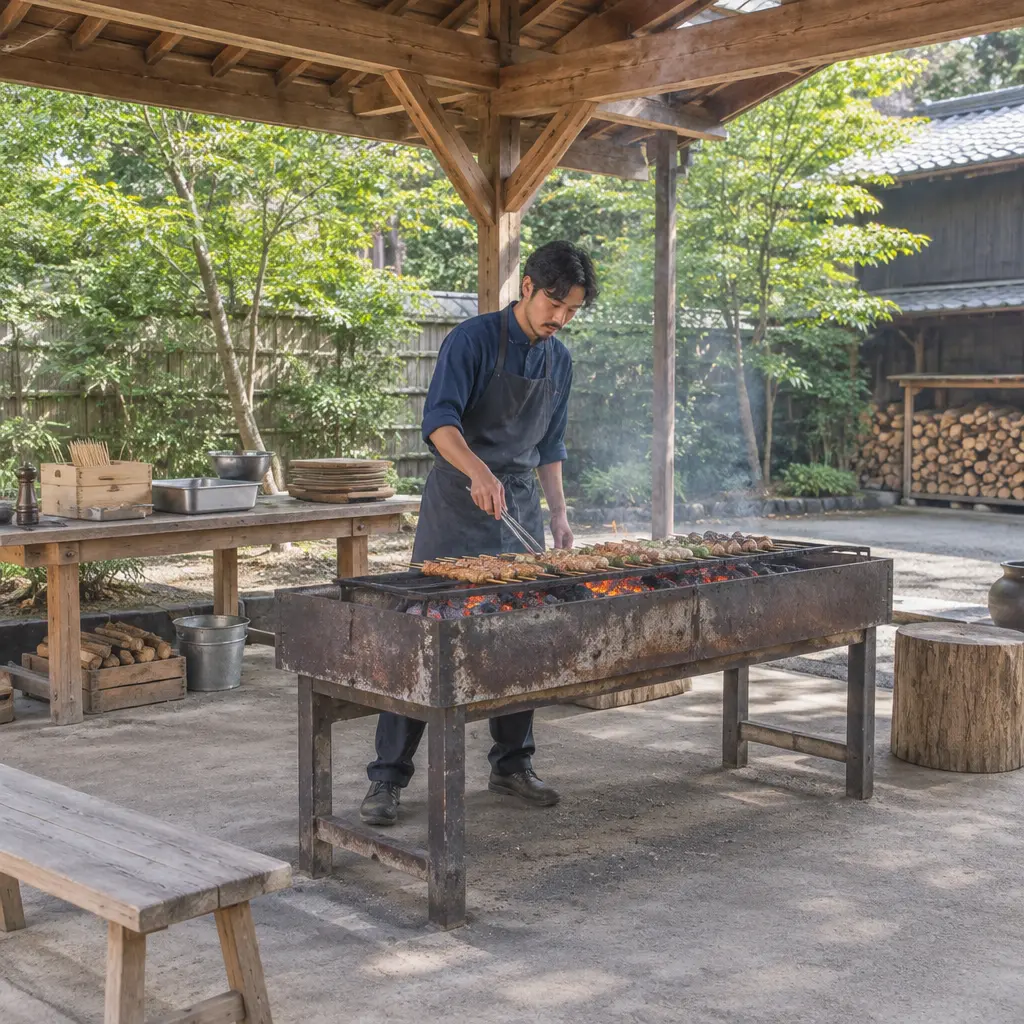
Robata charcoal selection shapes how quickly food sears, how much smoke it absorbs, and whether delicate ingredients retain their natural flavor. Robata is a Japanese style of cooking over charcoal, often associated with a hearth-like grill and foods cooked at varying distances from the heat. Choosing between dense binchōtan, accessible lump charcoal, and smoke-forward hardwood charcoal therefore means choosing a flavor profile as well as a fuel. The distinction matters in practice: charcoal type, airflow, fuel quantity, and distance from the embers all affect heat and smoke, while Japan’s Ministry of Agriculture, Forestry and Fisheries describes binchōtan as a high-carbon, hard charcoal prized for sustained heat and comparatively little smoke. This guide explains the main fuel choices, the flavor and heat characteristics they bring, how to match them to ingredients, and how to use them safely and consistently.
Defines Robata Charcoal Selection and Its Flavor Profile
Robata charcoal selection is the deliberate choice and management of charcoal to produce a desired combination of heat, combustion behavior, aroma, and smoke on a robata grill. It is not simply a choice of “which wood tastes best”: the fuel’s density and carbon content, the state of the coals, and the grill’s airflow help determine how food cooks. The Japan Wood-charcoal Association describes charcoal as wood carbonized with limited oxygen; different raw materials and carbonization methods produce fuels with different properties. In a robata setting, those properties influence both cooking performance and the character of the finished dish.
The core options are binchōtan and other white charcoals, ordinary hardwood lump charcoal, and briquettes. They are not interchangeable. Binchōtan is valued for long, steady heat and relatively restrained smoke once fully lit; lump charcoal typically offers quicker ignition and more variation in size and heat; briquettes are manufactured for uniformity, but binders or additives can make them unsuitable for flavor-sensitive cooking unless the product is explicitly intended for food grilling. A useful rule is to select fuel for the cooking task first, then adjust grill layout and distance to fine-tune flavor.
Explains How Robata Charcoal Selection Changes Flavor
Charcoal does not season food in the same way as a sauce or spice. Its influence comes mainly through radiant heat, smoke from incomplete combustion, and the vaporization and burning of fat and juices that reach the coals. The National Institute of Standards and Technology explains that combustion depends on factors including fuel, oxygen, and temperature; on a grill, those variables shift as the fire is lit, spread, or restricted. As a result, a fuel’s flavor contribution depends on how it is burned, not only on its wood species.
The most useful flavor distinction is between a clean, high-heat sear and a stronger smoke character. Fully ignited, well-ventilated coals generally produce less visible smoke than fuel that is still lighting or starved of oxygen. The U.S. Department of Agriculture’s food-safety guidance also emphasizes that grilling produces smoke and that cooking practices affect exposure to smoke-related compounds. For cooks, this supports a practical aim: allow charcoal to establish a stable ember bed before placing food over it, and avoid prolonged flare-ups from dripping fat.
Binchōtan: Clean Heat and Subtle Charcoal Character
Binchōtan is a dense Japanese white charcoal traditionally made from ubame oak and carbonized at high temperatures. Japan’s Ministry of Agriculture, Forestry and Fisheries identifies it as a particularly hard charcoal with high fixed-carbon content; its density helps it burn for a long time and deliver steady heat. When fully lit and used with suitable airflow, it tends to contribute less assertive smoke than many ordinary wood charcoals. Its profile suits fish, shellfish, vegetables, and carefully seasoned meats when the aim is to highlight the ingredient rather than overlay it with a strong wood aroma.
Binchōtan is not smokeless, nor is it automatically easier to use. It can take considerable time and a suitable high-heat starter to ignite, and its intense radiant heat can char food quickly at close range. In a robata grill, cooks can arrange pieces in a compact hot zone for searing and leave a cooler zone for finishing. The fuel’s long burn can be useful during service, but it also makes careful heat management important.
Hardwood Lump Charcoal: Flexible Heat and Wood Variation
Hardwood lump charcoal consists of carbonized wood pieces rather than compressed, uniformly shaped briquettes. Its size and composition vary by producer and batch, so ignition speed and heat can be less uniform. The U.S. Forest Service notes that wood species and production conditions affect charcoal properties; in cooking, that variability can translate into a more expressive or less predictable fire. Lump charcoal is a practical choice for robata-style cooking when cooks want a responsive fire and a moderate charcoal aroma, particularly for chicken, mushrooms, and robust vegetables.
The product label matters more than a broad claim that all lump charcoal has one flavor. Some bags contain mixed hardwoods, while others identify a specific species or origin. For reliable results, use food-grade charcoal with clear sourcing, screen out excessive small fragments that may restrict airflow, and build the fire in stages. A small amount of aromatic wood may be added when a deliberate smoke note is desired, but it should be treated as a separate flavoring choice rather than assumed to be part of the charcoal.
Briquettes: Consistency, Ingredients, and Caution
Briquettes are compressed fuel formed from charcoal fines and, depending on the product, other ingredients that help bind or ignite them. Their regular shape can make heat distribution more predictable than irregular lump charcoal. However, briquettes vary substantially: some are made from charcoal with minimal additions, while others include ignition agents or binders. For robata cooking, choose a product clearly labeled for food grilling and follow its instructions; never assume that a fuel designed for heating or industrial use is appropriate around food.
Briquettes can be useful where repeatable fuel sizing is more important than a distinctly Japanese charcoal tradition. They are generally less associated with the classic binchōtan profile, so cooks should test them before using them for delicate seafood or lightly seasoned ingredients. A simple side-by-side tasting—same ingredient, salt, grill position, and doneness—can show whether the fuel contributes unwanted odor or a flavor that competes with the menu.
Matches Robata Charcoal Selection to Ingredients and Cooking Zones
Fuel selection becomes more useful when paired with ingredient sensitivity and cooking distance. Delicate foods can be overwhelmed by heavy smoke or scorched by direct radiant heat, whereas fatty or strongly flavored foods can tolerate a more assertive fire. Robata grills commonly use height and distance to create different heat intensities; this makes zone design as important as charcoal species. The following matches are starting points, not fixed rules, because grill design, fuel quality, portion size, and ventilation all affect results.
Fish and Shellfish: Prioritize a Clean, Controlled Fire
Fish and shellfish benefit from stable heat and restrained smoke, particularly when served with simple seasoning. Binchōtan is a strong option for this profile, while well-lit hardwood lump can also work if the coal bed has settled and the grill is not producing heavy smoke. Cook delicate fillets farther from the hottest core or use a cooler zone to finish them gently; whole fish and thicker cuts can tolerate more direct heat when turned and monitored carefully.
Vegetables and Tofu: Balance Browning with Gentle Aroma
Vegetables and tofu take on grill marks and charcoal aroma readily, so moderate smoke and a controllable heat gradient are valuable. Dense charcoal can provide steady heat for repeated service, while lump charcoal offers responsive adjustment for smaller batches. Eggplant, peppers, onions, and mushrooms can be started closer to the heat for browning, then moved to a cooler area to soften without burning. Light oiling and turning also reduce sticking and limit flare-ups from excess drips.
Meat and Fatty Skewers: Manage Sear, Drippings, and Flare-Ups
Meat can benefit from a stronger sear and more pronounced charcoal character, but fat dripping onto the coals may cause sudden flames and bitter-tasting soot. Use a hot zone for brief browning and a cooler zone to finish thicker pieces. Trim or control excess fat where appropriate, keep skewers moving, and avoid letting flare-ups persist. If a smoky note is desired, build it through a clean, deliberate fire and modest exposure rather than by cooking over flames or smoldering fuel.
Guides Robata Charcoal Setup, Consistency, and Safety
A dependable robata fire follows a repeatable sequence: use suitable charcoal, ignite it completely, establish heat zones, and adjust airflow rather than repeatedly adding unlit fuel under food. Charcoal can produce carbon monoxide, an odorless gas that can be fatal. The U.S. Centers for Disease Control and Prevention warns that charcoal should never be burned indoors, in vehicles, tents, or other enclosed spaces. Commercial kitchens must use equipment and ventilation designed for solid-fuel cooking and follow local fire and building codes.
Build Zones Instead of Chasing One Temperature
A heat zone is an area of the grill with a distinct cooking intensity. Concentrating coals beneath one section creates a hot searing zone, while a thinner bed or a zone without coals provides a place to rest and finish food. This arrangement gives cooks control over browning and doneness without relying on a single, unstable fire. A long-handled thermometer can help check food temperature, while observation of coal color, distance, and cooking time helps maintain the grill’s working pattern.
Use a Repeatable Ignition and Replenishment Routine
Light charcoal in a designated, well-ventilated area using equipment approved for the fuel, and wait until it is burning steadily before cooking. Adding fresh, unlit charcoal directly beneath food can generate unwanted smoke and create uneven heat. During longer service, replenish the fire in a controlled manner and allow new fuel to establish before moving food over it. Record the charcoal brand, approximate quantity, grill layout, and cooking time during menu testing; these notes make it easier to reproduce a preferred flavor profile.
Control Smoke and Protect Food Quality
Heavy smoke can signal incomplete combustion, poor airflow, damp fuel, or food drippings burning on the coals. Adjust ventilation and food position, and let the fire stabilize rather than trying to mask the problem with seasoning. The USDA recommends avoiding direct exposure of food to flames and reducing smoke where practical when grilling. For a robata menu, cleaner combustion supports both more precise flavor and a more controlled cooking environment.
Conclusion: Make Charcoal Choice Part of the Recipe
Robata charcoal selection defines flavor through the interaction of fuel, oxygen, heat, smoke, and cooking distance. Binchōtan offers long-lasting, steady heat and a restrained charcoal character; hardwood lump provides flexibility and more variation; briquettes can offer consistency when their ingredients and intended use are clear. Matching fuel to fish, vegetables, or meat—and building separate hot and cool zones—helps cooks express ingredients without letting smoke or flare-ups take over.
For further refinement, test fuels side by side with the same ingredients and seasoning, document the setup, and consult local fire-safety requirements for solid-fuel equipment. Treat charcoal as an active ingredient in the cooking process: a thoughtful choice can make the difference between a generic grilled flavor and a distinctive robata profile.
Sources: Japan Ministry of Agriculture, Forestry and Fisheries, “Binchotan,” https://www.maff.go.jp/e/cc/; Japan Wood-charcoal Association, “About Charcoal,” https://www.mokutan.org/; National Institute of Standards and Technology, “Combustion,” https://www.nist.gov/; U.S. Department of Agriculture, Food Safety and Inspection Service, “Barbecue and Food Safety,” https://www.fsis.usda.gov/food-safety/safe-food-handling-and-preparation/food-safety-basics/barbecue-and-food-safety; U.S. Centers for Disease Control and Prevention, “Carbon Monoxide Poisoning,” https://www.cdc.gov/carbon-monoxide/about/index.html; U.S. Forest Service, “Charcoal Production,” https://www.fs.usda.gov/